Publishing new content is important, but refreshing old content is often faster, cheaper, and more profitable. For many websites, some of the easiest SEO wins come from pages that already rank — just not high enough.
This content refresh Malaysia guide shows you how to identify underperforming pages, update them strategically, and turn aging content into better rankings, stronger clicks, and more conversions in 2026.
Key Takeaways – Content Refresh Malaysia
- Content refresh Malaysia is one of the fastest ways to improve existing SEO performance.
- Focus on pages with impressions, mid-tier rankings, and declining traffic.
- Refresh titles, intent, content depth, internal links, visuals, and CTAs.
- Use refreshed content to support both traditional SEO and GEO/LLM visibility.
- Track results after republishing so updates become repeatable, not random.
What Is a Content Refresh in SEO?
A content refresh means improving an existing page so it stays relevant, accurate, and competitive in search results. It is not the same as rewriting everything from scratch.
A good content refresh usually includes:
- Updating outdated facts or statistics
- Improving headings and structure
- Expanding missing sections
- Refreshing keywords based on current search intent
- Adding internal links and stronger CTAs
For Malaysian businesses, content refresh Malaysia is especially useful when your site already has older blogs, service pages, or guides that still get some impressions but no longer perform well.
Why Content Refresh Matters More in 2026
Search behaviour is evolving. Google and AI-driven search systems now favour content that is:
- Current
- Structured clearly
- Helpful and complete
- Easy to summarise and extract
That means old content can lose performance even if the topic is still relevant. This is often called content decay.
Refreshing content helps you:
- Recover dropped rankings
- Improve CTR without creating a new page
- Strengthen topical authority
- Support GEO and LLM visibility with better formatting
If your technical foundation is also weak, pair content updates with a proper technical SEO audit in Malaysia before scaling.
How to Know Which Pages Need a Content Refresh
Not every page needs work. Prioritise pages that already show signs of opportunity.
Look for pages that have:
- Good impressions but low clicks
- Rankings between positions 5 and 20
- Old dates or outdated examples
- Declining traffic over the last 3–6 months
- Weak internal linking or no recent updates
Use Google Search Console and GA4 to find these pages. In many cases, one solid refresh can outperform publishing three mediocre new posts.
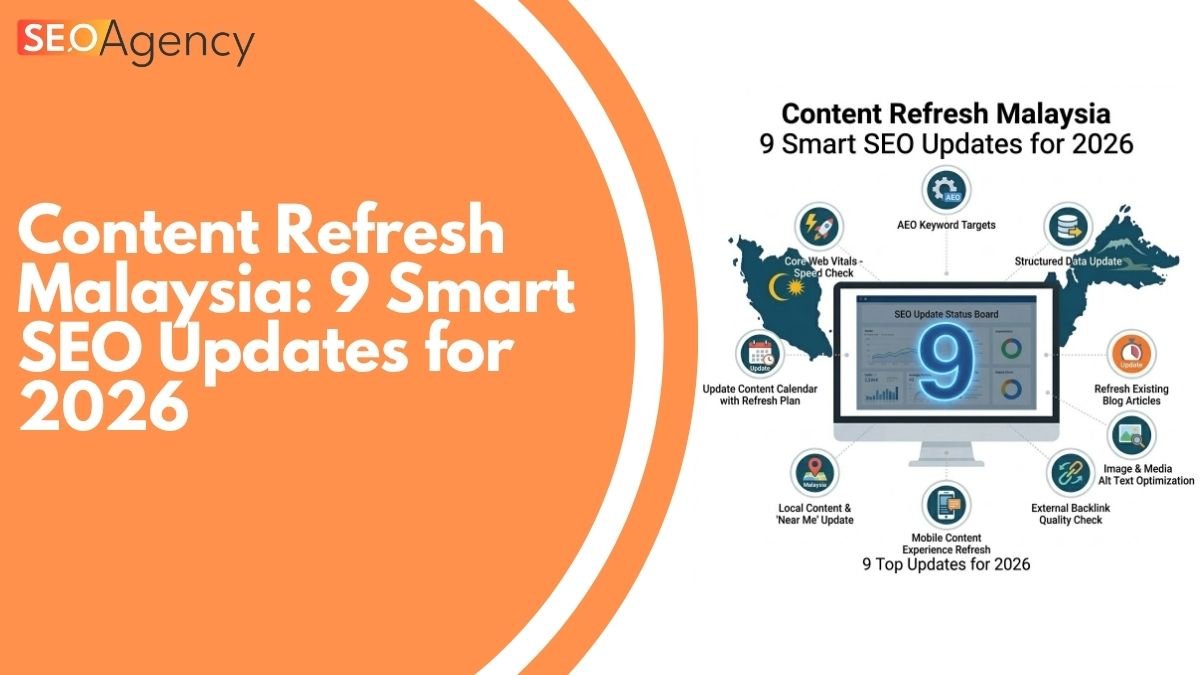
Content Refresh Malaysia – 9 Smart SEO Updates
Below are the updates that usually make the biggest difference.
1. Update the SEO Title and Meta Description
Your title and meta description often become outdated first. If your page still gets impressions but few clicks, fix the snippet before rewriting the body.
A better title should:
- Put the focus keyword near the start
- Include a stronger value proposition
- Add a number, year, or practical benefit where relevant
This alone can improve CTR significantly.
2. Recheck Search Intent
Intent changes over time. A keyword that once favoured broad informational content may now favour comparison pages, checklists, or service-led results.
Ask:
- Are the top-ranking pages now more commercial?
- Are AI summaries surfacing practical answers?
- Do users want definitions, steps, or tools?
Re-align your page to what Google currently rewards, not what worked two years ago.
3. Expand Thin or Incomplete Sections
Many aging posts rank poorly because they no longer feel complete. Add missing subtopics, examples, tables, or FAQs.
For example, if you update an older Local SEO article, link it to:
- Local SEO services in Malaysia
- Local SEO citations in Malaysia
- Google Business Profile optimisation guide
This helps both topical depth and internal relevance.
4. Add Fresh Internal Links
A refreshed page should not stay isolated. Strengthen it by linking to your latest service pages, cluster posts, and relevant supporting resources.
Useful internal link patterns include:
- Blog → Service page
- Cluster blog → Pillar blog
- Pillar blog → Cluster blog
- Blog → Homepage using semantic anchors like SEO company in Malaysia or SEO Agency Malaysia
Internal links help users, crawlers, and AI systems understand the relationship between topics.
5. Improve Structure for GEO and LLM Readability
This is where many websites still fall behind. A content refresh in 2026 should improve how a page is understood by both Google and AI systems.
Use:
- Clear H2 and H3 headings
- Short paragraphs
- Bulleted lists where helpful
- Comparison tables
- FAQ sections
- Key Takeaways blocks
This makes your content easier to scan, summarise, and quote in AI-generated answers.
6. Refresh Statistics, Examples, and References
Outdated facts weaken trust. If you cite tools, guidelines, or market data, review them carefully.
Good refresh sources include:
- Google Search Central
- PageSpeed Insights
- Industry tools and product documentation
This improves EEAT and keeps your content credible.
7. Update Calls-to-Action
A page that ranks but does not convert is unfinished. Refresh your CTA to match user intent and your current service offering.
For example:
- Add a CTA to link building services in Malaysia if the post discusses authority
- Add a CTA to technical audit services if the post covers speed or crawl issues
This is one of the simplest ways to improve the business value of a refreshed page.
8. Re-optimise Visual Assets
If your post includes images, charts, or screenshots, refresh those too.
Make sure each asset has:
- Descriptive filenames
- Relevant alt text
- Updated captions
- Clear, high-resolution visuals
This supports multimodal discovery and improves accessibility at the same time.
9. Measure Results After Republishing
A content refresh is not complete until you measure its effect. Track:
- Clicks
- CTR
- Average ranking
- Organic conversions
- Time on page
Check results after 2, 4, and 8 weeks. Small improvements often compound over time.
When to Refresh vs When to Rewrite
Not every weak page should be refreshed. Sometimes a rewrite is better.
| Situation | Refresh | Rewrite |
| Page still gets impressions | Yes | Sometimes |
| Intent is mostly the same | Yes | No |
| Content is outdated but salvageable | Yes | No |
| Topic has changed completely | No | Yes |
| Structure is too weak to fix easily | Sometimes | Yes |
The key is to protect useful existing authority while making the page more competitive.
Common Content Refresh Mistakes
Many websites do refreshes badly. Common problems include:
- Changing the title but not improving the body
- Updating the date without adding value
- Stuffing new keywords unnaturally
- Forgetting internal links
- Refreshing pages that never had ranking potential in the first place
A smart content refresh Malaysia strategy is selective, data-driven, and tied to clear business goals.
FAQs – Content Refresh Malaysia
Q1: What is a content refresh in SEO?
A content refresh means improving an existing page with updated information, stronger structure, better keywords, and more relevant internal links so it can rank and convert better.
Q2: How often should I refresh SEO content?
Most important pages should be reviewed every 6 to 12 months. Competitive topics may need updates more often, especially if rankings or click-through rates start dropping.
Q3: Does refreshing old content really help rankings?
Yes. Updating outdated pages can improve relevance, usability, and authority signals, which often leads to better rankings, stronger CTR, and more organic conversions.
Q4: What pages should I refresh first?
Start with pages that already have impressions or mid-page rankings. These usually offer the fastest gains because Google already sees them as somewhat relevant.
Q5: Should I change the URL when refreshing content?
Usually no. Keep the same URL so you preserve authority and existing backlinks, unless the page topic has changed so much that a full rewrite is necessary.
Q6: Is content refresh good for AI and GEO optimisation?
Yes. Refreshed content with better structure, FAQs, and clearer answers is easier for AI systems and Google’s generative features to understand and surface.
Refresh Smarter with SEO Agency Malaysia
Refreshing content the right way takes more than changing a date or rewriting a paragraph. It requires search intent analysis, internal linking strategy, technical checks, and conversion thinking.
If you want your old pages to start working harder, partner with a results-focused SEO Agency Malaysia that knows how to turn underperforming content into ranking assets. Our team combines:
- Technical SEO audits
- Link building support
- Content strategy and page optimisation
- Reporting frameworks that connect updates to results
Need help deciding what to refresh first? Work with a trusted SEO company in Malaysia and build a smarter content marketing growth system for 2026.