If you’re doing SEO but only looking at rankings or “traffic up/down”, you’re not really managing performance — you’re guessing.
Proper SEO reporting Malaysia is about building dashboards that show:
- Where organic traffic comes from
- Which pages and keywords drive leads or revenue
- How your SEO investment performs over time
In this guide, we’ll walk through 7 practical steps to build SEO reporting that works for Google, stakeholders, and even AI/LLM-based analysis.
Key Takeaways – SEO Reporting Malaysia
- SEO reporting Malaysia must go beyond rankings and traffic — it should connect to leads, revenue, and ROI.
- GA4, GSC, and Looker Studio are enough to build powerful, business-friendly dashboards.
- Segment data by intent, location, and branded vs non-branded keywords for clearer insights.
- Use reports to drive decisions on audits, content updates, and link building.
- Align reporting with your broader SEO strategy and GEO/AI optimisation goals.
What Is SEO Reporting and Why It Matters in Malaysia?
SEO reporting is the process of turning raw data from GA4, Google Search Console, and SEO tools into actionable, business-focused dashboards.
For Malaysian brands, good SEO reporting should:
- Show leads, sales, and ROI — not just “visits”
- Separate branded vs non-branded performance
- Highlight local search impact (e.g. “near me” queries)
- Support decisions about content, technical fixes, and SEO audit work
Without this, it’s impossible to justify SEO budget or prioritise tasks.
Core Metrics to Track in SEO Reporting (Malaysia)
Before building a dashboard, decide what to measure. For most sites, these are the essentials:
1. Organic Sessions & Users
Track how many visitors arrive via Organic Search over time.
Segment by:
- Country (Malaysia vs other markets)
- Device (mobile vs desktop)
- Landing page (which pages attract users)
2. Conversions & Goal Completions
SEO that doesn’t convert is just noise. Track:
- Form submissions
- Quote requests
- Ecommerce transactions
- WhatsApp or call clicks
Combine this with your earlier SEO ROI Malaysia calculations.
3. Revenue or Lead Value
If you run eCommerce, use GA4 eCommerce tracking.
If you’re B2B/services, assign an estimated value per qualified lead (e.g. RM300 per SQL).
4. Keyword & URL Performance
From Google Search Console:
- Top queries by clicks and impressions
- Top landing pages
- Click-through rates
- Average position
Use this with your SEO audit tools stack to decide what to improve.
5. Technical Health Indicators
Include simple technical KPIs from audits:
- Pages with 404s or critical issues
- Core Web Vitals status
- Mobile usability
These tie back to your Technical SEO Checklist Malaysia content.
7 Steps to Build an SEO Reporting Dashboard in Malaysia
You don’t need a complex enterprise setup. Follow these steps and you’ll have a solid reporting foundation.
Step 1 – Set Clear SEO Objectives
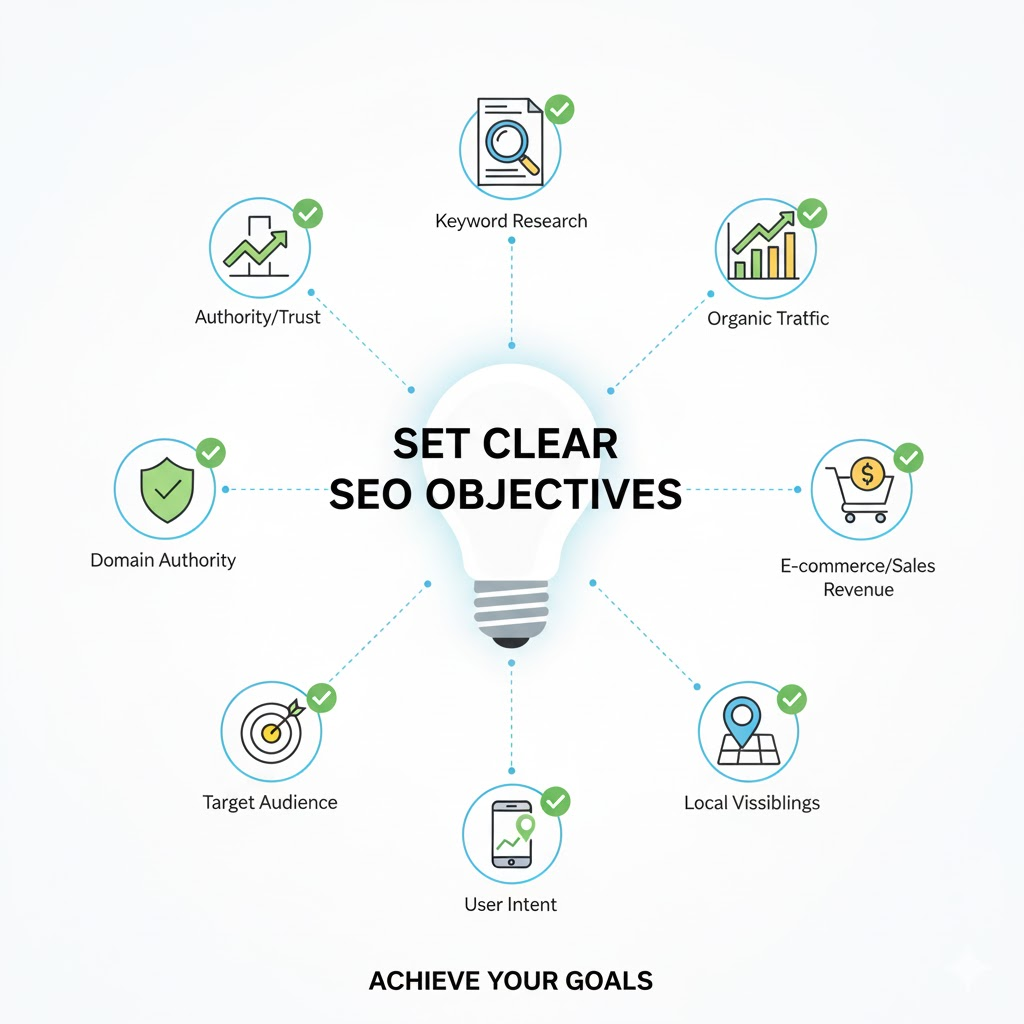
Decide what SEO must achieve in the next 6–12 months, such as:
- Increase non-branded traffic by 40%
- Generate 50 qualified leads/month from organic
- Grow SEO-driven revenue by 25%
These targets will guide what you show in reports.
Step 2 – Configure GA4 Correctly
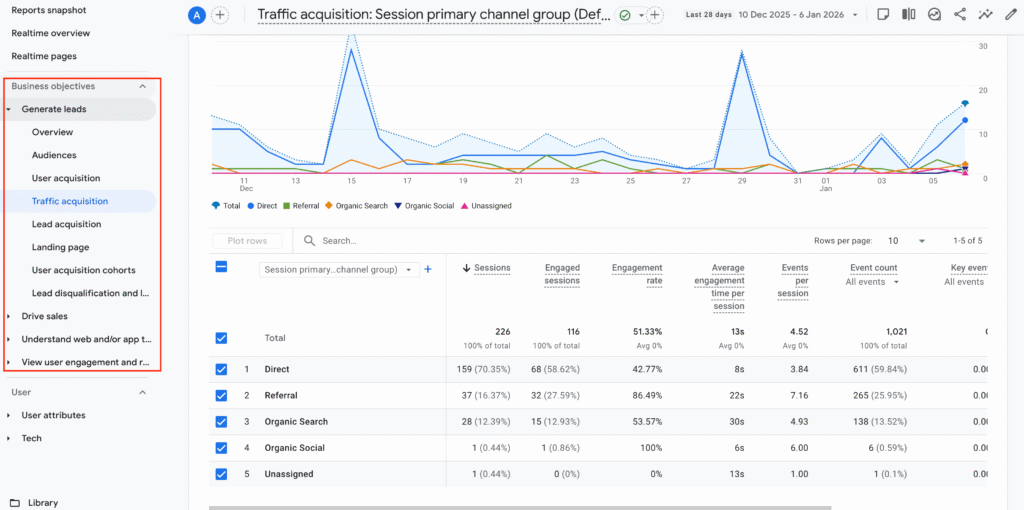
Ensure GA4 is properly set up to track:
- Events (button clicks, scrolls)
- Conversions (forms, purchases, sign-ups)
- Ecommerce (if applicable)
Use Google Tag Manager to track actions like phone clicks or WhatsApp chats, which are common conversions for Malaysian SMEs.
Step 3 – Connect Google Search Console
Link GSC to GA4 and later to Looker Studio. This lets you see:
- Which keywords drive the most traffic
- Which pages get impressions but low CTR
- Where to update meta titles and content
Pair this with content improvements guided by your Content Marketing for SEO Malaysia pillar.
Step 4 – Choose Your Reporting Stack
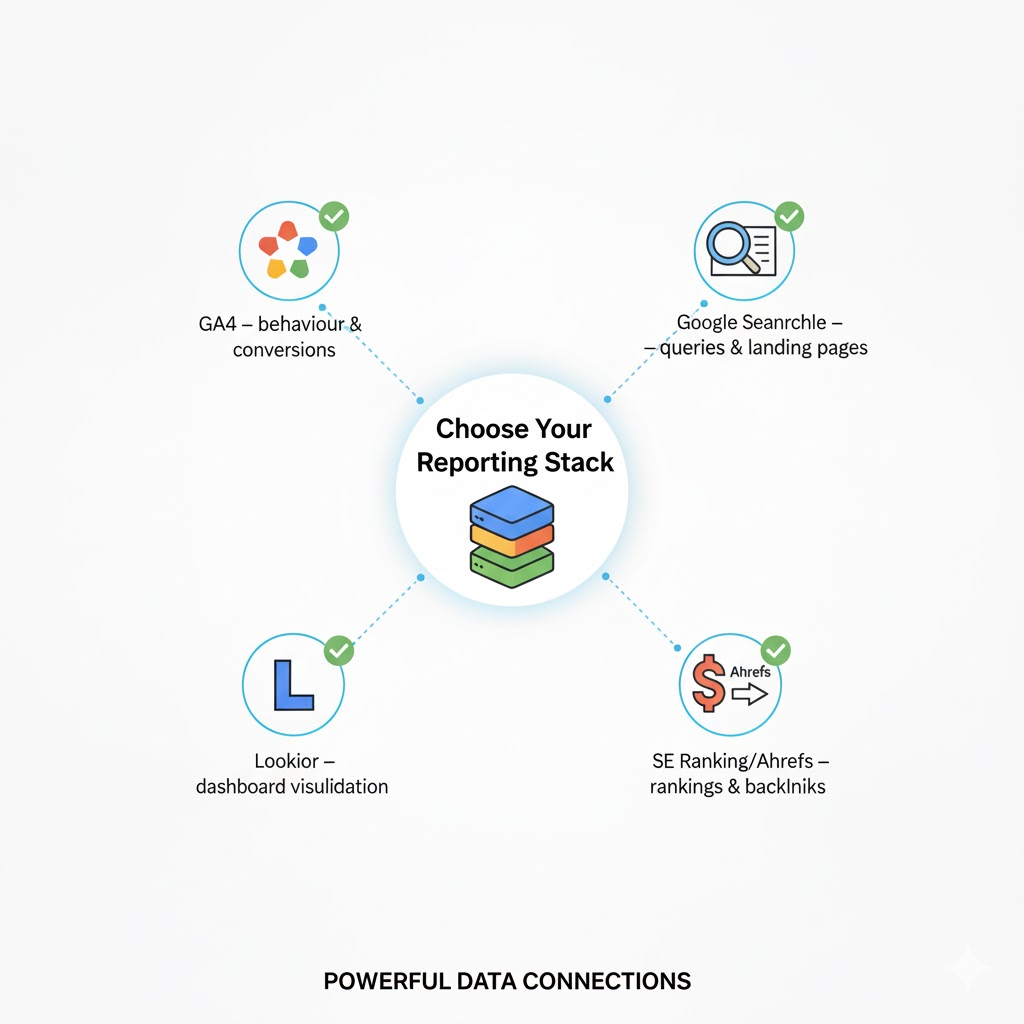
For most Malaysian businesses, this combination is enough:
- GA4 – behaviour & conversions
- Google Search Console – queries & landing pages
- Looker Studio – dashboard visualisation
- SE Ranking/Ahrefs – rankings & backlinks (optional but helpful)
Don’t overcomplicate: start lean, then expand.
Step 5 – Build a Monthly SEO Dashboard in Looker Studio
Create a simple, stakeholder-friendly report with sections like:
- Executive Summary – key wins, key issues
- Traffic Overview – organic vs other channels
- Top Pages & Queries – where growth comes from
- Conversions & Revenue – what SEO is actually worth
- Technical & Content Actions – what’s next
You can even dedicate a section to AI/LLM readiness: structured FAQs, schema usage, and GEO content performance.
Step 6 – Segment Reports by Intent & Location
To align with GEO and AI search, segment reports by:
- Branded vs non-branded keywords
- Informational vs commercial pages
- Location-based queries (e.g. “kuala lumpur”, “penang”)
This helps refine Local SEO work alongside Local SEO Malaysia services.
Step 7 – Turn Data into Action Items
Reporting is useless if it doesn’t change behaviour.
For each monthly report, list 3–7 actions, such as:
- Improve internal links from blogs to SEO service pages
- Fix 404s and slow pages identified in tech audits
- Refresh content on pages with high impressions but low CTR
- Build links to top-converting landing pages via link building campaigns
Document these in a simple “Next 30 Days” action list at the end of your report.
Common SEO Reporting Mistakes in Malaysia
Even good dashboards can fail if they:
- Focus only on rankings, not leads or revenue
- Hide important data behind complex charts
- Ignore Local SEO metrics (Map Pack, GBP performance)
- Don’t separate branded vs non-branded terms
- Are never tied back to SEO strategy or roadmap
A good SEO reporting Malaysia setup should be understandable by non-SEO stakeholders in a few minutes.
FAQs – SEO Reporting Malaysia
Q1: How often should I report on SEO performance?
Monthly is ideal for SEO reporting in Malaysia. Weekly checks are fine, but big decisions should be based on monthly or quarterly trends.
Q2: What is the most important metric in SEO reporting?
Ultimately, revenue or lead value from organic search is most important. Rankings and traffic are supporting indicators, not the main goal.
Q3: Do I need paid tools for SEO reporting?
Not always. GA4, Google Search Console, and Looker Studio are free and enough for most small and mid-sized businesses in Malaysia.
Q4: How does SEO reporting link to SEO ROI?
Reporting feeds directly into SEO ROI measurement by connecting traffic, conversions, and revenue back to SEO activities and costs.
Q5: Can SEO reports help with AI and GEO optimisation?
Yes. By tracking structured content, FAQs, and user intent, you can see which pages are likely to be surfaced in AI-generated answers.
Q6: Should I include technical metrics in every report?
At least a summary. Keep detailed tech metrics for SEO teams, but show high-level health indicators in stakeholder dashboards.
Build Smarter SEO Dashboards with SEO Agency Malaysia
Good tools don’t guarantee good reporting — the strategy behind them does. If you want reporting that your C-level, marketing, and sales teams can all understand and use, partner with a data-driven SEO services in Malaysia.
Our team helps you:
- Set up GA4, Tag Manager, and SEO dashboards correctly
- Run regular technical SEO audits
- Align content and SEO campaigns to KPIs and ROI
- Report in a way that works for both Google and AI-driven search engines
Ready to turn your reports into real decisions and real growth?
Start with a customised SEO reporting framework from a results-focused SEO company in Malaysia today.